
THE ALBORZ JOURNAL ·
What to know about delicious Persian kebabs
Kebab is one of Iran's best loved foods. Chelo kebab with butter, sumac, onions and grilled tomatoes is a familiar taste for many Iranians wherever they live.
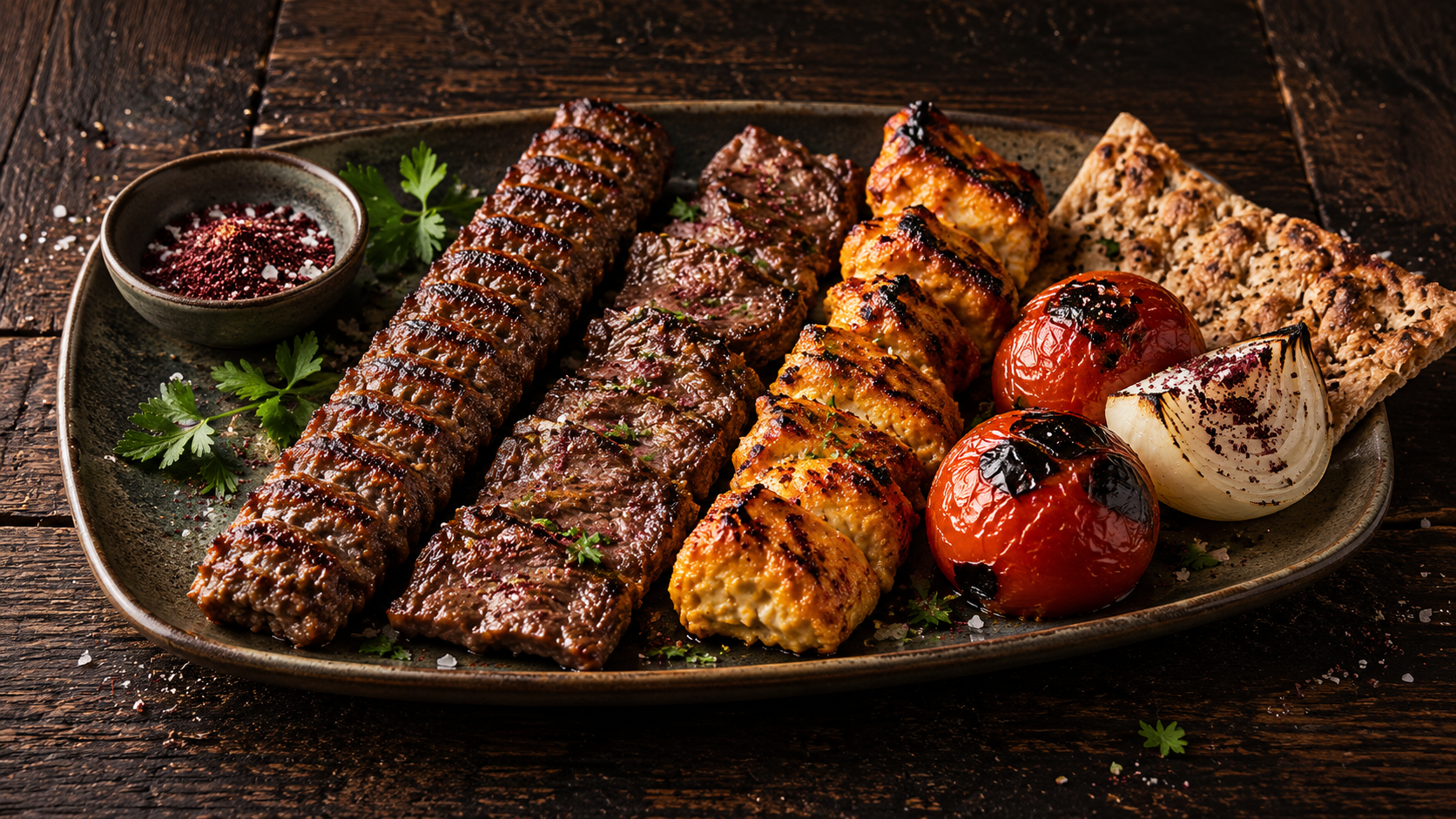
Kebab is one of Iran's most popular foods. For many Iranians, chelo kebab is a taste of home, especially when served with butter, sumac, onions and grilled tomatoes. Its aroma is hard to resist.
Kebab and its accompaniments
For people who eat meat, grilling can be a lighter cooking method than frying. Avoid cooking meat over excessive heat until it becomes dry or charred. Many kebabs are made with beef or lamb, which provide protein, iron and zinc. The original article recommends eating kebab with a little rice or sangak bread, tomatoes, sumac, onions, vegetables, fresh lemon and some yogurt or doogh.
Popular Iranian kebabs
Kebab barg is made from lamb or veal fillet or loin. Koobideh is made from minced meat mixed with onion and, in the version described here, egg and baking soda, then shaped onto wide skewers. Chenjeh consists of thicker separate pieces of meat. Shishlik uses rib pieces arranged on a skewer and is associated with Shandiz near Mashhad. Soltani combines one skewer of koobideh with one of barg. Torsh kebab from Gilan uses fresh beef with sour ingredients such as pomegranate paste and bitter orange juice. Bakhtiari kebab alternates pieces of meat and chicken on a skewer.
Serving and preparation tips
Use salt sparingly when preparing the meat, as too much can make it firm. If preferred, add a little after cooking. People with dietary restrictions, including gout or conditions affected by red meat or fat, should follow advice appropriate to their health. Chicken kebab may be an alternative for those avoiding red meat. Chelo kebab with rice and accompaniments can be a substantial meal, so adjust the serving to your needs. Buy meat from reputable suppliers and choose cuts with less excess fat.
Traditional kebab restaurants sometimes count a serving of chelo kebab as one dast. It usually means a plate of rice with one skewer of barg or two skewers of koobideh, served with grilled tomato, sumac, onion and often doogh. Today, many restaurants simply call it a serving. Fresh lemon juice served with red meat can help the body absorb iron. The original article suggests drinking doogh after the meal rather than with it.